EN
EN

What Are the Main Influencing Factors of Plastic Pipe Extrusion Precision?
The properties of raw materials have an essential role in the precision of plastic pipe extrusion. The stability of the extrusion process relies on the physics and chemistry of the plastic. First, the melt flow rate (MFR) of the plastic material is critical. The plastic pipe extrusion MFR is too high: the molten plastic will flow too quickly during extrusion, causing uneven pipe wall thickness; if the MFR is too low, the fluidity of the material will become viscous, extrusion resistance will increase, and pipe surface cracking will occur. Second, uniformity of the material composition is critical. Impurities and uneven additive distribution in the plastic material will cause uneven consistency in the molten material, resulting in a pipe of uneven density that will compromise accuracy in the dimension. Moreover, the moisture content in the plastic material is also important. Excessive moisture will turn to gas and create bubbles in the pipe when plastic pipe extrusion is performed at elevated temperatures, minimizing pipe structural integrity and precision which also violates standard specification.
After selecting plastic materials having uniform properties, applying pre-treatment, including drying, is necessary for precise plastic pipe extrusion.
How does Control of Extruder Temperature Improve the Precision of Plastic Pipe Extrusion?
In plastic pipe extrusion, the control of extruder temperature is of the utmost importance, and even the slightest temperature variations will affect the precision of the final plastic pipe. The extruder barrel has different temperature zones so every zone must be configured to reasonable values based on the plastic to be extruded. While processing polyethylene (PE) pipes during plastic pipe extrusion, the feeding zone temperature must be low to prevent early melting that will cause blockages while the temperature within the melting zone and homogenizing zone must be increased and varied in order to fully melt and mix the materials. Materials may decompose if the temperature in certain zones becomes too high, producing charred materials that will coat the inner barrel wall and disrupt the flow of the molten materials, leading to uneven wall thickness of the pipe.
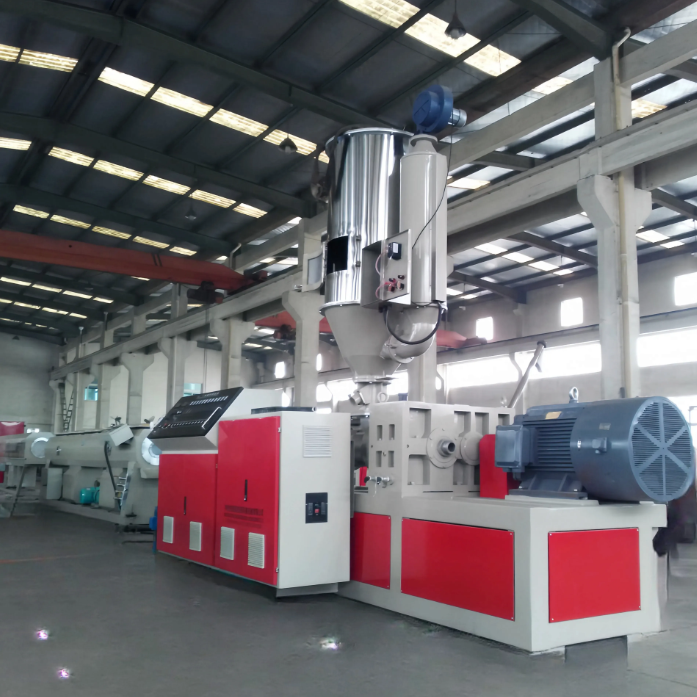
However, melting materials at low temperatures results in materials not being entirely molten, thus leaving solid particles inside the pipe. This impairs the aesthetics and precision of the pipe. Thus, the stable extrusion precision of plastic pipes also requires the installation of a high precision temperature control system and continuous temperature monitoring and adjustments.
The Impact Extrusion Speed Has on the Precision of Pipe Extrusion
When it comes to pipe extrusion, there is a balancing act that must occur between the supply of the extrusion material and the shaping of the material. This requires that the speed of extrusion be carefully calibrated. If the speed is appropriate and the plastic is extruded at the right tempo, the molten material will be uniformly apportioned to the shape being molded, and a complete shape will be achieved by the cooling system. Conversely, a too high speed of extrusion will leave unfilled spaces in the mold, resulting in a pipe that has a reduced diameter and uneven walls. Excessively rapid extrusion will also lead to a flow of material that exceeds the designed shear limits, thus creating a pipe that has internal stresses and affecting the stability of the pipe.
When the extrusion speed is too low, it reduces the efficiency of plastic pipe extrusion, and the molten material will spend too long in the barrel, causing the material to over melt and decompose, which will impact the accuracy of the pipe. Also, the degree of matching of the extrusion and traction speeds is critical in plastic pipe extrusion. If the traction speed is greater than the extrusion speed, the pipe will be overly stretched and the diameter and wall will be thinner. If the traction speed is less, then the pipe will stack, leading to deformation. Therefore, effective control of the extrusion speed and coordination with the traction speed will enhance the precision of plastic pipe extrusion.
The Influence of the Design of the Mold and the Accurate Manufacturing on the Plastic Pipe Extrusion.
The mold is the most crucial element in defining the plastic pipe shape and size in plastic pipe extrusion, and as such, the precision of the design and the mold manufacturing will directly affect the plastic pipe extrusion precision.
The design of the mold greatly affects the plastic pipe extrusion process. Optimizing the channels of the mold promotes even flow of the molten plastic during the extrusion process. Flow channels with sudden changes in direction, extreme narrowness, or dead space will cause uneven distribution of molten plastic, resulting in uneven pipe walls. The proportions of the mold cavity must also be accurate. The design specs of the completed pipe must be matched in the mold cavity diameters and wall thickness, as well as in the inner cavity of the outer cavity in the mold. Even the slightest cavity size errors will cause the plastic pipe to deviate in precision to the design specs. Other mold design and construction precision issues also influence the extrusion precision, such as the surface of the cavity mold and the alignment or concentricity of the mold and core.
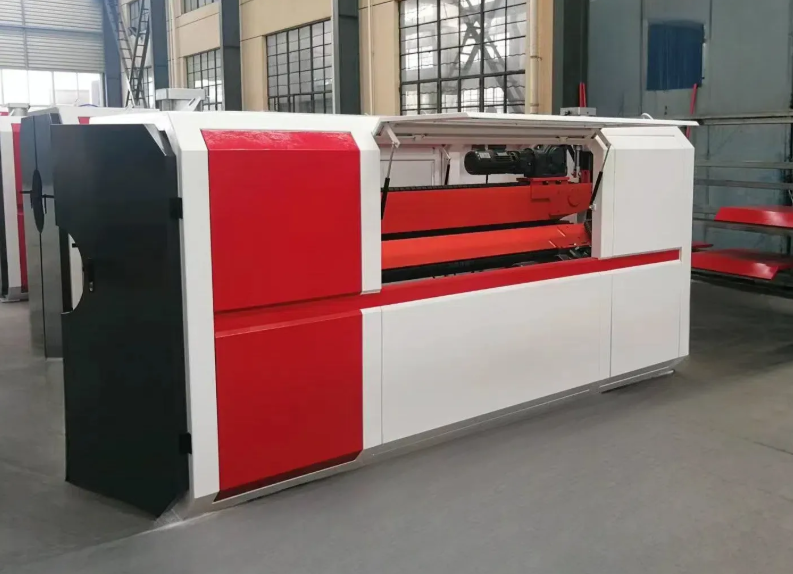
A mold with a rough inner surface will increase the friction between the molten material and the mold wall, causing uneven flow of the material and affecting the smoothness of the pipe surface; poor concentricity will lead to eccentric walls of the pipe, which is a common precision defect in plastic pipe extrusion. Therefore, adopting scientific mold design methods and high-precision manufacturing processes, such as CNC machining and grinding, are necessary to ensure that the mold meets the requirements of plastic pipe extrusion precision.
How Cooling System Performance Affects Plastic Pipe Extrusion Precision
The cooling system is responsible for solidifying the molten plastic pipe into the required shape in plastic pipe extrusion, and its performance directly affects the dimensional stability and precision of the pipe after shaping. In plastic pipe extrusion, the cooling method and cooling efficiency of the system are the key factors to consider. Common cooling methods include water cooling and air cooling, among which water cooling is more widely used in plastic pipe extrusion due to its higher cooling efficiency.
Nonetheless, if the flow rate is uneven or the water is too warm, the rate at which different parts cool will be inconsistent. For instance, during water cooling, the outer surface may over-cool, while the inner surface remains warm, causing 'frozen stress and deformation' which will affect pipe precision. Conversely, if the cooling rate is excessive during the extrusion of plastic pipes, the surfaces will cool and the inner material will still be soft, causing warping and other defects. Also, in pipe extrusion, the pipe and cooling apparatus need to be separated uniformly. If the cooling water ring is misaligned to the pipe, local areas will cool too quickly which can cause uneven cross-sectional areas. Hence, the design of the cooling system, control of temperature and flow rate stabilization, as well as the alignment of concentric cooling devices, are fundamental to improving the precision of plastic extrusion pipes.
The Importance of Equipment Maintenance on Sustained Plastic Pipe Extrusion Precision
Ordered and effective routine maintenance is a principal guarantee for the plastic pipe extrusion precision to remain at a steady level in the long term. This is because the wear and tear of components will gradually affect the extrusion.
Let’s start with maintenance for the plastic pipe extrusion extruder. First, the screw and barrel need to be cleaned and checked for wear regularly. They are the most vital parts that transport and melt the materials, and wear on the screw surfaces as well as carbon build up on the barrel’s inner wall will affect the transportation speed and even the melting. This will cause precision fluctuations in extruding the plastic pipe. Maintenance of the plastic pipe extrusion equipment’s traction device also needs to be done regularly. The wear of the traction roller or loosening of the transmission belt will cause unstable traction speed which affects the matching of the traction speed and extrusion speed. This will cause the pipe to have dimensional deviations. The measuring and control instruments on the equipment, such as temperature sensors and speedometers, should also have their precision checked and calibrated regularly. Without a means to control temperature and speed, extrusion precision will be adversely affected.
To maintain stable precision in the extrusion of plastic pipes, there should be a well organized maintenance system, periodic checks and renewals of the weak components, and the calibrations of the measuring devices.