EN
EN
Collection & Pre-Sorting: Securing High-Purity ABS Feedstock
The first step to achieving positive outcomes in ABS recycling is the recycling facility's ability to collect, and sort, and, procurement of ID plastics, waste, post-consumer waste from electronic cases and, modular car components, and durable household item end of life components. Each sorting facility is staffed by workers equipped with IR sorters, cleaning and flotation sorters, and multi-material collectors to sort out plated metals, PVC, and contaminated mixed plastics. Achieving a recycling facility feedstock purity of 95% with ABS is a necessity since the other materials left in the feedstock will release contaminants and exhaust the polymer melts during the process making the end product polymer melts weaker. Manufacturers have noted the materials sorted by the recycling facility to be 30% more usable and energy conserving during the polymer melting process.
How Contaminants Are Removed From ABS Recycling
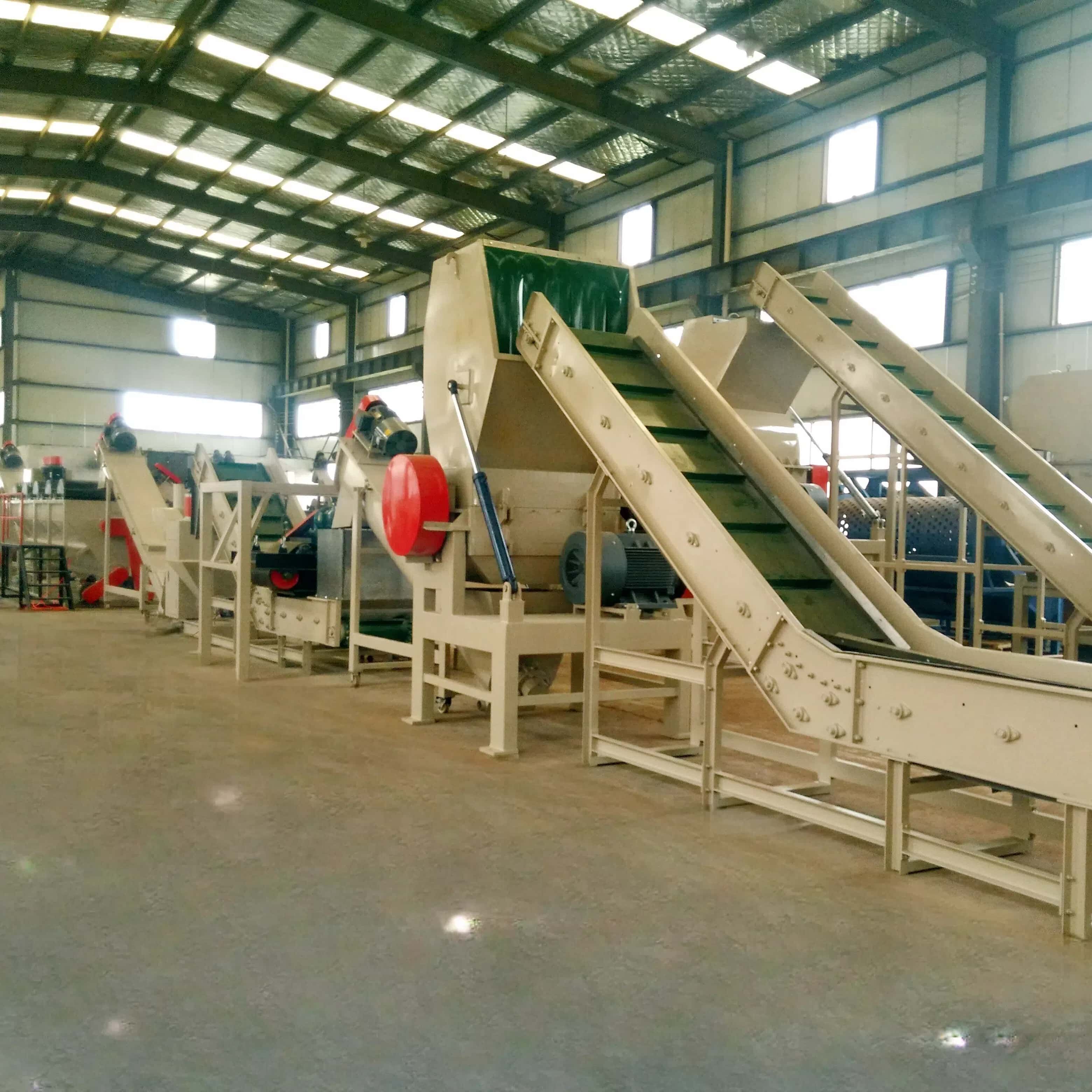
Pre-cleaning shredding and drying ABS post-consumer plastic for recycling begins by removing contaminants. The first step involves cleaning. The main contaminants include adhesives, ink, and plastic dust. A combination of high-power washing and specially designed cleaning agents removes these contaminants without damaging the polymer. The cleaned ABS plastic is then shredded into uniform pieces of 5 to 10 mm. In order for the ABS plastic pieces to melt evenly, these dimensions are critical. Lastly, centrifugal drying is performed. During this step, water is removed from the material to less than 0.5 percent. In extrusion, water will create steam bubbles and unstable melt viscometers that will ruin the ABS. The lower the moisture content, the better the quality of the final product.
Extrusion involves melting, filtering, and homogenizing recycled ABS to achieve uniformity.
Once shreadded and dried, the ABS materials go through twin screw extruders that melt the plastic between 200 to 230 degrees Celsius. The plastic then is moved through multiple layers of filtration. These layers span from 20 to 150 microns. The layers filter out tiny pieces that could contaminate the finished pellets. The extrusion process also involves mixing, and for this process, mixing is very important to achieve even distribution of the polymer chains. If the polymer chains are not evenly distributed, the material will not have good performance in terms of tensile and impact resistance. Research studies conducted on plastic materials have shown that during processing, even the smallest variation in temperature can reduce the impact resistance by almost 40 percent. Impact resistance is good in materials that are processed when temperature levels are evenly maintained during the entire extrusion process. This is why consistent temperature is necessary during extrusion for durable materials.
Pelletizing and Quality Verification: Steps in Reliable ABS Recycle
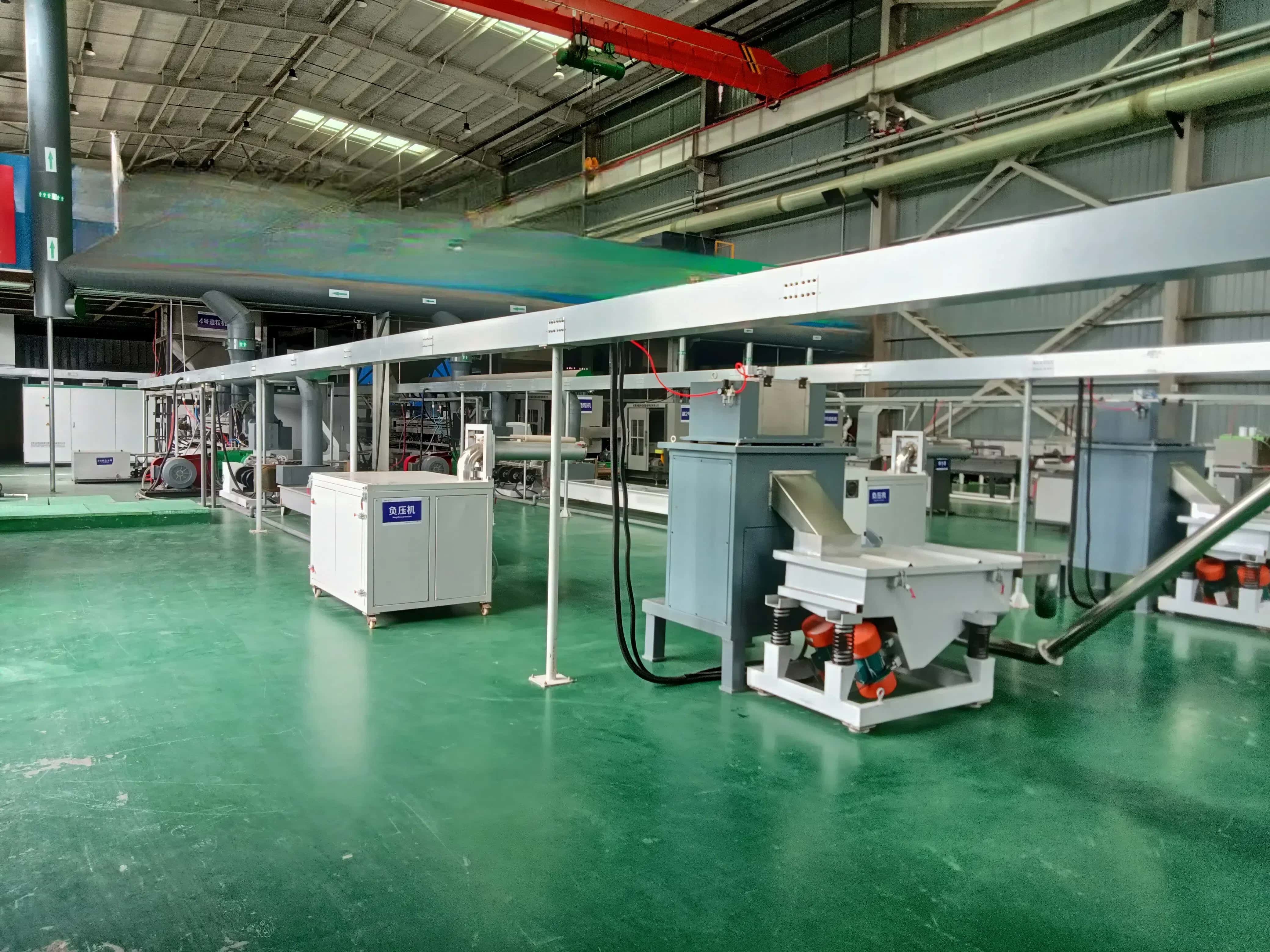
Pelletizing begins with synchronized strand pelletizers cutting extruded strands into uniform 2 - 5 mm pellets. This is then followed by automated checking, which includes
Melt Flow Index (MFI) testing to check flow consistency
FTIR spectroscopy to identify flow contaminants
Density testing to check uniformity of pellets
Only batches that meet ASTM D5205 standards are qualified for commercial reuse and ensure that recycled ABS for automotive interior parts and electronics enclosures meets dimensional, rheological, and compositional criteria.
Technological, Design, and Logistical Factors Affecting Recycled ABS Efficiency
Recycling Through Design: Merged Design and Material Identification Improves ABS Recycling Efficiency
The recyclability of a product starts long before it gets to its end-life stage, and it begins with the product design stage. When products are marked with the plastics coding on them (i.e., ABS or SPI number 7) as a part of their design, the recyclability of the product is improved. In fact, as a part of the design, the sorting machines can do about 65% better with labeled pieces as opposed to unlabeled pieces. Additionally, modular design encourages manual dismantling and modular design encourages manual dismantling. These design features include and enable easy manual dismantling, such as tool-less snap-together electronic case or grille modules that allow easy dismantling. Manufacturers who design for recycling can gain significant advantages. These designs enable recyclers to recover about 40% more ABS material from each processed ton of scrap, resulting in lower waste processing time and cleaner inputs for the recycling process.
Closed-Loop Collection Systems: Expanding Commercial ABS Recycle Via Take-Back Programs
Implementing take-back programs means companies establish dependable supply chains for post-consumer ABS materials. Companies with structured return systems report an average recovery rate of 78% for ABS containing products. Creating collection points within the same region is beneficial for the aforementioned reasons as well as for contributing to a 30% reduction in transport emissions. This stability supports investment from the manufacturer in sorting and extrusion technologies. This investment will progressively decrease the cost disparity between recycled ABS and virgin resin and will eventually make sustainably sourced materials the preferred choice.
Technology Challenges of ABS recycling
There are three primary technical challenges of ABS recycling: polymer degradation, the problems concerning the processing of the ABS polymer, and the raw materials used that show a lack of consistency. Polymer chains are broken by ultraviolet (UV) radiation and repeated heating cycles. These chains are the primary structure that provide the polymer with impact and tensile strength. This degradation weakens the polymer and renders the polymer inadequate for structures that require integrity. Similar problems arise in the extrusion phase when melt flow rates are inconsistent and in conjunction with melt flow rate (MFR) and melt blow (MB) filters that are inadequate to produce a consistent quality of pellets. Players in the industry are turning to various functional additives to help mitigate this problem. In this case, chain extendors are used to 're-build' lost molecular weight through the recycling of the polymer. New UV and heat stabilizers offer the potential for polymer chains to remain intact to the point that about 90% of the polymer impact strength that is found in 'virgin' ABS is maintained. In conjunction with better filtration that maintains contaminant levels below 0.5% and design strategies of using single materials and homogenizing the polymer grades, the costs associated with reprocessing are lowered by 15 to 30%.
We have used recycled ABS that meets the toughest standards of several original equipment manufacturers (OEMs) for automotive and consumer electronics applications. This demonstrates the validity of this recycled material for purposes in large-scale circular economy systems.
FAQs
What is ABS plastic?
ABS (Acrylonitrile Butadiene Styrene) is a durable thermoplastic extensively used in different applications because of its strength and rigidity and for being chemically resistant.
Why is sorting by type, color and contaminant level important in ABS recycling?
Sorting focuses on the processing of a single plastic type with additive contaminants in order to streamline the recycling process and improve recycled material quality.
What is the reason for the washing step in the ABS recycling process?
Washing adheres to the integrity of the polymer chain by removing contaminants that would otherwise impede melting of the polymer and improve the recycling process.
Table of Contents
- Collection & Pre-Sorting: Securing High-Purity ABS Feedstock
- Extrusion involves melting, filtering, and homogenizing recycled ABS to achieve uniformity.
- FTIR spectroscopy to identify flow contaminants
- Closed-Loop Collection Systems: Expanding Commercial ABS Recycle Via Take-Back Programs
- Technology Challenges of ABS recycling
- FAQs