EN
EN
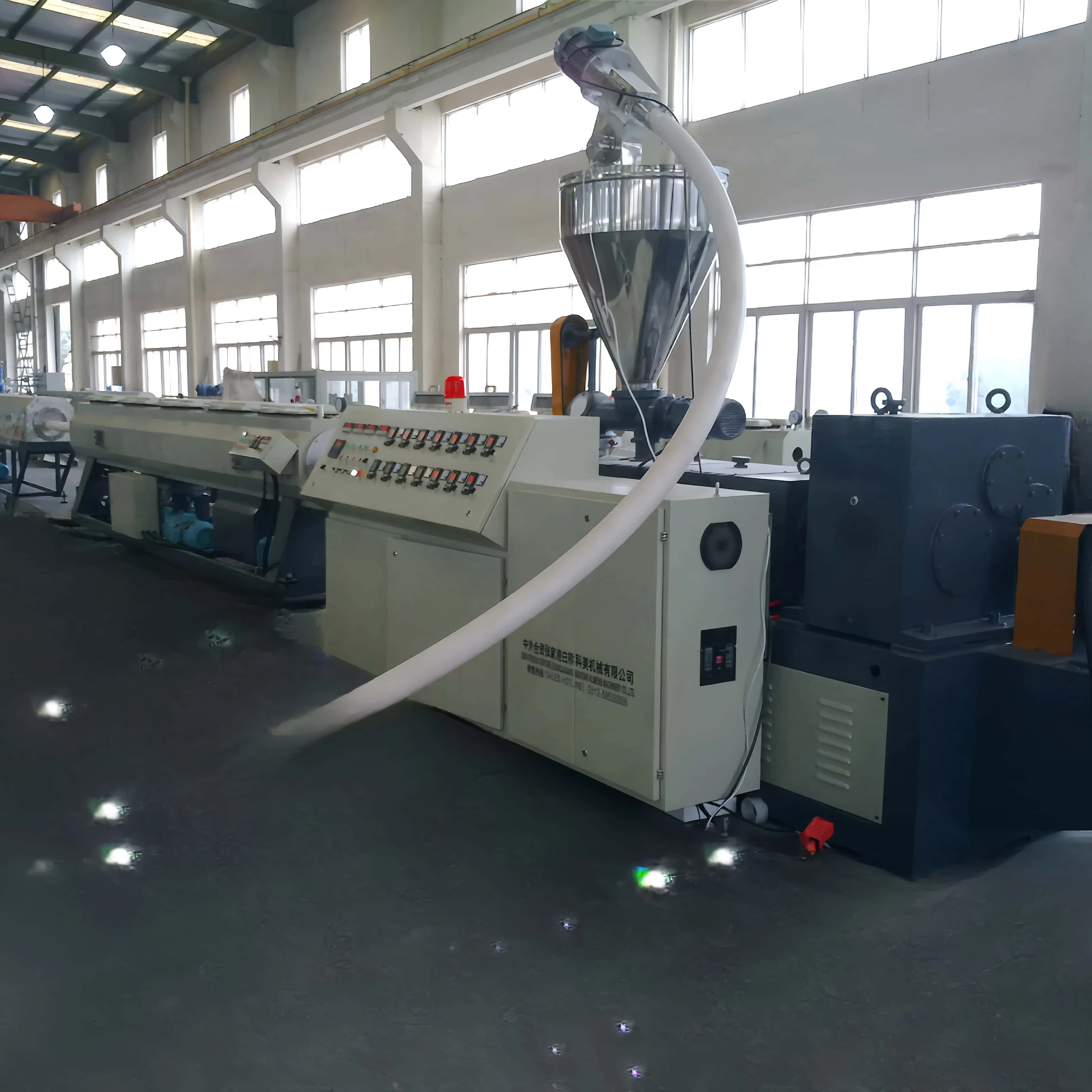
Precision Extrusion: Screw Design and Drive Systems for Optimal Melting Quality
Getting melt quality for plastic pipe extrusion starts with the configuration of the screws and the type of drive system being used. PVC processors usually prefer twin-screw extruders since they are better at withstanding and mixing the shear forces of the materials. However, single screw set ups are more economically viable in high volume extrusion of polyethylene or polypropylene. Optimizing screw configurations is demonstrated in the studies published in the Plastics Engineering Journal to reduce energy consumption and mechanical overheating rupture of the extrudate by 15 to 20 percent, which resulted in the reduction of the operational challenges of the screw.
Comparison of Twin-Screw and Single-Screw Systems for Extrusion of PE, PP and PVC Pipes
Twin screw systems:
Best for heat sensitive PVC as they provide high degree mixing by means of intermeshing screws, and their self-wiping action eliminates material stagnation.
Single screw systems:
Best for PE and PP when high throughput is required, while employing more straightforward mechanics, they are more designed requiring custom screw configurations to address deficiencies in distributive mixing and to maximize throughput.
Screw Geometry Optimization: Compression Antinomy, L/D Ratio, and Barrier Flight
Heterogeneity of melts is determined by three parameters:
Compression ratio (2.5:1 to 3.5:1 for PVC) determines how the polymer is compacted
L/D ratio (25:1 to 32:1) determines how long the polymer will be melted to ensure uniform melting
Barrier flights restrict the flow of melted polymer, resulting in a variation of 40% in the output of the melted polymer, compared to the old designs (Polymer Processing Report 2024)
Dimensional Control: Technologies for Die Heads, Vacuum Control, and Cooling
Calibration of Cooling and Vacuum for Control of the Annular Die Flow and for the Control of the Die Swell of ±0.15 mm Tolerance Pipes
The design of the annular die is crucial for even distribution of polymer during the entire process of extrusion of plastic pipes. At the design stage, a good design can avoid the uneven flow imbalances that cause the production of undesired variations in wall thickness along the entire pipe. Nowadays, the vast majority of manufacturers use Computational Fluid Dynamics (CFD) software to optimize the design of their flow channels in order to achieve the tight design tolerances of ±0.15 mm for pipes that are expected to be under pressure. After the extrusion of the pipes, the control of die swell becomes the next critical step. Advanced control systems are equipped with adaptive predictive control to modify the positions of elements, referred to as mandrels, to control how different materials swell.
The optimal configurations achieve dimensional accuracy of about 0.6% in the common plastics of PVC, HDPE, and PP. Temperature-regulated die lips also play a beneficial role, stabilizing melt viscosity and, in practice, reducing thickness variation by about 40%.
Vacuum Sizing Tanks with Adjustable Multi-Zone Pressure and Segmented Cooling
The most sophisticated recent vacuum calibration tanks feature multiple pressure blocks of varying vacuum levels which create streamlined zones of differing vacuum levels. Molten pipes are gradually formed against these precision machined sleeves. Cooling happens in stages, and each section of the tank independently controls the temperature of the enclosed chamber. In the first section, quick water injections cool the exterior of the pipe, while subsequent sections are designed to reduce the stress from the cooling material. This approach minimizes the tendency of pipes to become non-round and to develop defects in the pipe surface. Even at line speeds exceeding 40 meters per minute, this system achieves a roundness variation of less than 0.3%. Users of these systems report a 25% reduction in post-production dimensional correction and a 30% reduction in water consumption owing to the coolant recycling system.
Post-extrusion handling processes such as haul-off, cutting, and coiling can impact surface quality and throughput.
A plant's ability to keep a product's dimensional accuracy and proper surface appearance relies greatly on how post-extrusion handling processes are performed. Haul off extrusion units have been designed to enhance surface quality. Uses of belts and caterpillar tracks are used as constant tension surfaces. If this process malfunctions, surface defects and diameter irregularities would be present on the extrusion. A sample of this is 'flying saws'- and even- 'planetary cutters'. These saws and cutters are used to create 'neater' cuts and 'clean' finishes on the surface of products to prevent surface defects of weak areas. Finally, the coiling systems utilize adjustments to manage tension on the flexible hoses. The process is designed to decelerate the pipe to minimize surface impacts and prevent scratches and surface defects. The flexible pipes are moved to a stacking conveyor, which is designed to control surface impacts and prevent scratches and surface defects.
Thanks to these different parts collaborating, most places remain within an impressive 0.3% tolerance across batches. With the ability to increase production speed, along with the 15% waste reduction when compared to older, non-continuous methods, the benefits are clear.
Smart Manufacturing Integration: Real-Time Monitoring and Industry 4.0 in Plastic Pipe Extrusion
Laser Gauging, SCADA Feedback Loops, and Predictive Adjustment for Rework Reduction
We are now in the fourth industrial revolution, and it is changing the way we manufacture plastic pipes, with the increased use of sensors and automated systems. Modern laser gauges can continuously check the diameter of the pipe with an accuracy of 0.05 mm. Measurements of pipe diameter can cause gaps outside the standard 0.15 mm tolerance. All of the data collected from the gauges is sent to a data acquisition system, or SCADA system. The SCADA system adjusts the speed of the extruder screws and haul-off systems in real-time. Some algorithms try to predict issues from previous data, to avoid problems, and prevent issues such as uneven heating spots and odd shaped pipes from wasting materials.
According to last year's Plastics Technology Journal research, factories that have implemented new processes have seen about 30% reductions in fixing issues in post production. Several factors contribute to this, for example first, improvement to real time die swell issue corrections, second, changes in automation cooling from cytos scanners that accurately measure the thickness of cooling walls, and last, the ability of new algorithms to effectively predict motor failures prior to breakdowns during operation. This type of monitoring within the system also reduces material raw waste to about 22% while maintaining the same level of quality. This is also true for manufacturers using PVC, HDPE, and PP resins. To achieve the stringent ASTM F714 standards, it is significantly easier when everything is kept to specification throughout the manufacturing process.
FAQ Section
What are the advantages of twin-screw extruders for PVC? Optimal material mixing and better handling of shearing forces gives twin-screw extruders the edge over the competition.
What role does screw design play in extrusion efficiency? Efficient designs can lower energy consumption by 15% and minimize the thermal degradation of the material.
How does vacuum calibration impact the production of pipes? With vacuum calibration, there is improved roundness and consistency of the pipes made, plus advanced vacuum calibration reduces the need for post-production adjustments by 25%.
How is laser gauging beneficial in the manufacture of plastic pipes? Laser gauging gives the plastic pipe manufacturer the ability to measure in real time, and provide feedback to the manufacturer which helps to ensure pipes remain within 0.15 mm tolerance which improves accuracy.
Table of Contents
- Comparison of Twin-Screw and Single-Screw Systems for Extrusion of PE, PP and PVC Pipes
- Dimensional Control: Technologies for Die Heads, Vacuum Control, and Cooling
- Post-extrusion handling processes such as haul-off, cutting, and coiling can impact surface quality and throughput.
- Laser Gauging, SCADA Feedback Loops, and Predictive Adjustment for Rework Reduction
- FAQ Section