EN
EN
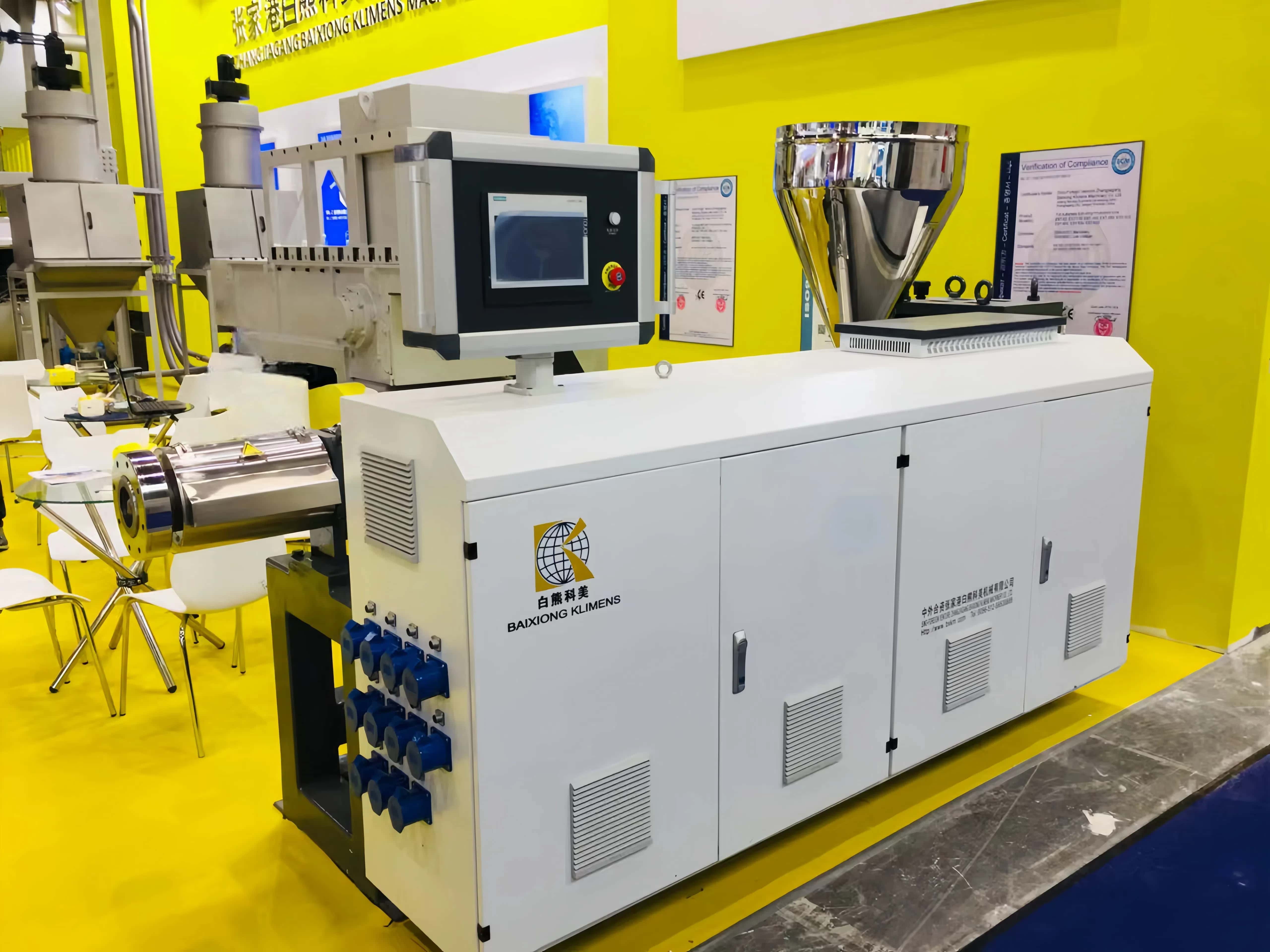
The single-screw extruder stands out due to its simplicity and beneficial characteristics for versatile plastic processing. A single-screw extruder consists of a heated barrel and a single spiral screw. While being melted and processed, the materials are moved through the die. The benefits of single-screw extruders include:
- Decreased maintenance costs
- Analytical and electrical processing supports the energy-saving processing of uniform, solid plastic materials (thermoplastic)
- Ensured quality output for simple structures, such as tubing or sheeting
- Smooth and low-impact action preserves sensitive resins from overheating
Single screw extruders are best suited for high volume manufacturing runs of plastic products such as polyethylene pipes. However, they do not possess the ability to design or handle complicated composite materials, poor mixing design. In fact, for the average manufacturing, they outperform the majority of twin screw extruders. They also retain the ability to operate at the highest manufacturing speeds, outpacing specialty extruders for singular tasks. For simplicity and cost of manufacturing, it's plain to see that for extended batch manufacturing of raw resins (without proprietary additives), the simplistic system saves the company around 30 to 50 percent.
Single-screw extruders are still the go-to choice for continuous processing in global commodity plastics manufacturing. They are still the cheapest, and most reliable option when product specifications require no filler blending or reactive modification.
Twin-Screw Extruders: Best for Thermally Sensitive Plastics, Filled Plastics, and High Mixing
When determining the best mixing and processing options, twin-screw extruders are the best choice for most applications. They provide excellent design flexibility, including configured, balanced, and differential rotation for up to four zones in the mixing chamber. From the beginning, the screw rods can be designed (layered or sectioned) to improve and develop the mechanical interaction in and among the components of the system. This not only helps with mixing and processing, it also allows for improved dispersion of reinforcing filler like glass fibers and flame retardants, disperse the most. This feature is particularly useful for engineering plastics with uniform strength or PVC. Furthermore, as most medical grade compounds are ultimately thermally sensitive, where breakdown of the material is likely when heat is too high and exposed for too long, the design offers immediate and continuous flow of the material through the system. Because of this, it is not only ideal for medical grade compounds thermally, it also ensures the system’s material breakdown is kept low. This is particularly important for the manufacturers of medical devices, as any variation in the material properties of the device can alter its functionality in a critical way, leading to either a safe or unsafe medical device.
In the case of food grade polymers and some additives, mixed materials and their complicated structures lead to problems with consistency. Single screw alternatives are unable to obtain complete mixing and twin screw systems surpass the other options. Manufacturer reports show that while the single screw counterpart handles about half the volume, these systems are able to, on average, complete twice as many production runs. That is particularly important with industries that require manufacturing to be extremely consistent from batches, particularly in materials for aircraft construction or drug packaging. The construction of these extruders with the possibility of interchangeable screws is what makes this possible. Engineers are able to change settings to control the force applied during processing and to control thermally different zones of the machine. This adaptability contributes to sufficient outcomes, despite the extremes, with varying thicknesses and structures of materials.
Ram Extruders: Ultra-High-Viscosity and Shear-Sensitive Materials
Unlike standard models which use rotating screws, Ram extruders are unique because they use hydraulic pressure to push materials through dies. Because of this, they excel at working with materials like PTFE which are very viscous or shear sensitive. The design of these extruders creates a unique set of operating conditions that sidesteps the overheating and breakdown of these materials that occurs with screw systems, maintaining the integrity of the molecular structure of the materials, even the most heat intolerant of materials. Because of this, these extruders are capable of continuously producing solid shapes, like rods, tubes, and billets, at far greater pressures than conventional extruders. They can even exceed 10,000 PSI. Because of this, ram extrusion is the standard in aerospace and chemical processing industries for producing large quantities of precision parts with very tight tolerances. However, these extruders are not very versatile and can only process a single material at a time. Because of this, ram extruders are only useful in specialized cases where material property retention is paramount over multi-marerial processability.
Also, keeping these units operational is complicated due to the intricate high-pressure hydraulics, requiring the kind of specialized training that operators need to complete before they can work independently.Choosing the Appropriate Extruder: A Step by Step Decision Making Process
Matching Extruder Type to Material Characteristics (Viscosity, Fillers, Thermal Stability)
The nature of the material being processed plays a significant role in determining the appropriate extruder configuration. For difficult, high-viscosity materials such as rigid PVC, we require a strong screw that can withstand the necessary processing torque without stalling. In contrast, for shear-sensitive materials such as some biopolymers, a gentler process is required to avoid breaking down the material during processing. With filled materials, such as glass-reinforced composites, it is advisable to select barrels that are resistant to wear and screws that are specifically designed for wear efficiency. The materials that are thermally unstable also present unique problems. They really need a lot of temperature control and a short residence time in the machine. This is where twin screw extruders demonstrate their purpose by having a modular barrel configuration that is more effective in temperature control. Compounding wear problems, a recent paper in the Polymer Engineering Journal indicates that materials containing more than 40% fillers can wear equipment 60% more than unfilled materials.
Statistics like this reinforce the need to consider investing in more robust components when processing highly filled formulations.
Matching Extruder Functionality to End-of-Line Objectives (Throughput, Quality, Versatility)
The volume and quality of the output stream really determines the type of extruder that makes the most sense for the application. In the case of large volume production runs of extruded products like pipes, single screw systems are probably the best fit as they are the most cost effective large volume pumps. However, when the application requires a high degree of precision, for example, tubes for medical applications that must be maintained to a tolerance of +/- 0.05 mm, it is common for manufacturers to choose extruders that have closed loop pressure control and melt pump configurations. Likewise, production facilities that frequently change the type of material being processed, find modular twin screw extruders very advantageous, as they allow the quick and easy exchange of screws to be made in the operating oven. Manufacturing facilities that have a large range of similar products have demonstrated the ability to reduce changeover times by up to 30%, and this has been shown to result in production facilities operating 18% more efficiently year-round.
FAQs
What are the advantages of single screw extruders?
The main advantages of single screw extruders are lower operating costs, energy-efficient processing, consistent product quality for simple profiles, and a milder shear rate that is suitable for processing.
In what way do twin-screw extruders enhance the mixing process?
The effective mixing of the polymer with the additives within engineering plastics is aided by the large shear force generated by the twin screws.
Which materials are ideal for processing with ram extruders?
Due to their self-hydraulic mechanism that prevents overheating and the breakdown of the material, ram extruders are ideal for the processing of PTFE and other ultra-high viscosity and shear-sensitive materials.
What factors need to be considered in choosing an extruder?
When choosing an extruder, the properties of the materials such as viscosity, fillers, and thermal stability need to be considered contrary to the throughput, consistency and flexibility of the process.
Table of Contents
- Twin-Screw Extruders: Best for Thermally Sensitive Plastics, Filled Plastics, and High Mixing
- Ram Extruders: Ultra-High-Viscosity and Shear-Sensitive Materials
- Matching Extruder Type to Material Characteristics (Viscosity, Fillers, Thermal Stability)
- Matching Extruder Functionality to End-of-Line Objectives (Throughput, Quality, Versatility)
- FAQs