EN
EN
Innovative Engineering for Thermal Management Systems
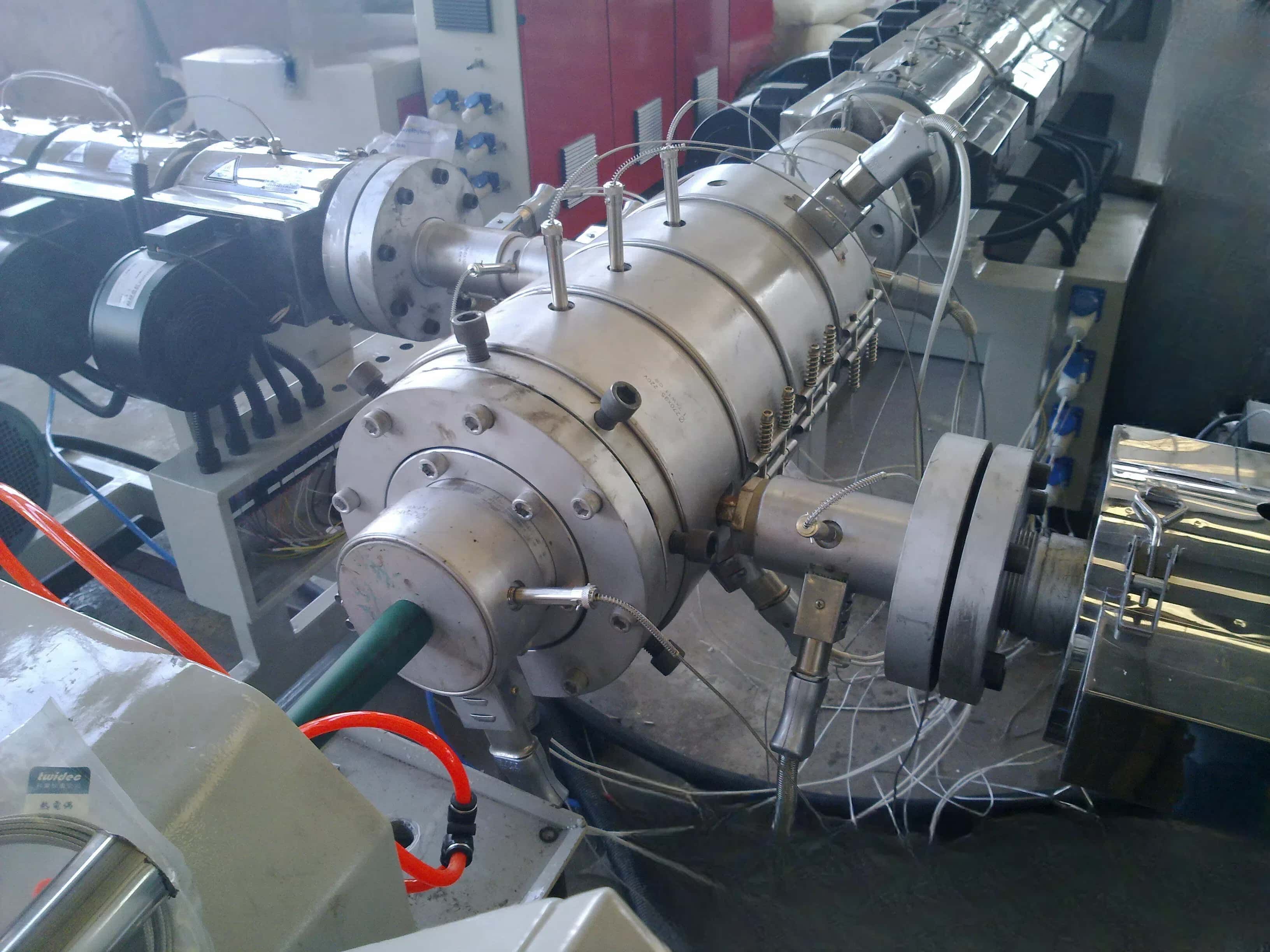
In optimal plastic pipe extrusion, the thermal management system must maintain consistent melt properties and dimensional stability of the melt stream. Inadequate thermal management may result in material degradation, flow surges in the extrusion system, and the production of material that is economically unrecoverable. In a Ponemon Institute study, it was revealed that companies lose thermal management system precision between $600,000 and $744,000 annually. In patented thermal management systems, an improvement of 30 percent in defect reduction is achieved by maintaining barrel zones within 2 degrees of set point in temperature. Consistent thermal management is simply good for business.
PID Controlled Multi-Zone Heating/Cooling Systems for Melt Homogeneity
To achieve melt consistency, modern extrusion devices utilize multi-zone PID temperature control systems. These systems 'self-manage' heating and cooling in response to shifting process conditions including changes in material viscosity and variable screw temperature due to shear heating. These systems eliminate process conditions that lead to unstable melt consistency during processing, which include insufficient heating for polymer melt and cold spots to ensure complete polymer melt fusion, temperature-dependent viscosity at melt entrance to die, excessive radial temperature variations, and polymer chain degradation due to excessive thermal degradation. Modern systems achieve energy savings of about 1000 times compared to older systems that use on/off temperature control for heating and cooling. Polymer melt temperatures can be controlled within 1 degree Celsius with calibrated thermocouples. This and other advancements in melt temperature die control systems yield melt temperature and consistency control within a range acceptable for precise downstream processing.
IoT Enabled Smart Temperature Monitoring System with Predictive Thermal Analytics
The IoT sensors combined with cloud analytic systems means manufacturers no longer have to deal with thermal control in a reactive manner, but instead, a fully proactive approach is possible. The embedded sensors monitor melt temperatures at critical locations such as the die adapter, and screen changer locations and transmit data in real time to AI models that can predict issues as much as 15 minutes before they occur. What follows? Automated changes to the temperature setting, predictive analytics for band heater failures, and precise recommendations for equipment adjustments with recalibration based on actual usage data (as opposed to guesswork). A 17 percent reduction in scrap material and a 9 percent reduction in energy costs is typical for plants that employ these strategies. Given thermal and operational predictive analytics, factories can proactively act to reduce material waste.
Minimizing Waste in Plastic Pipe Extrusion with Closed-Loop Automation
Integrating Laser Scanners, Gravimetric Feeders, and ATC for Real-time Feedback
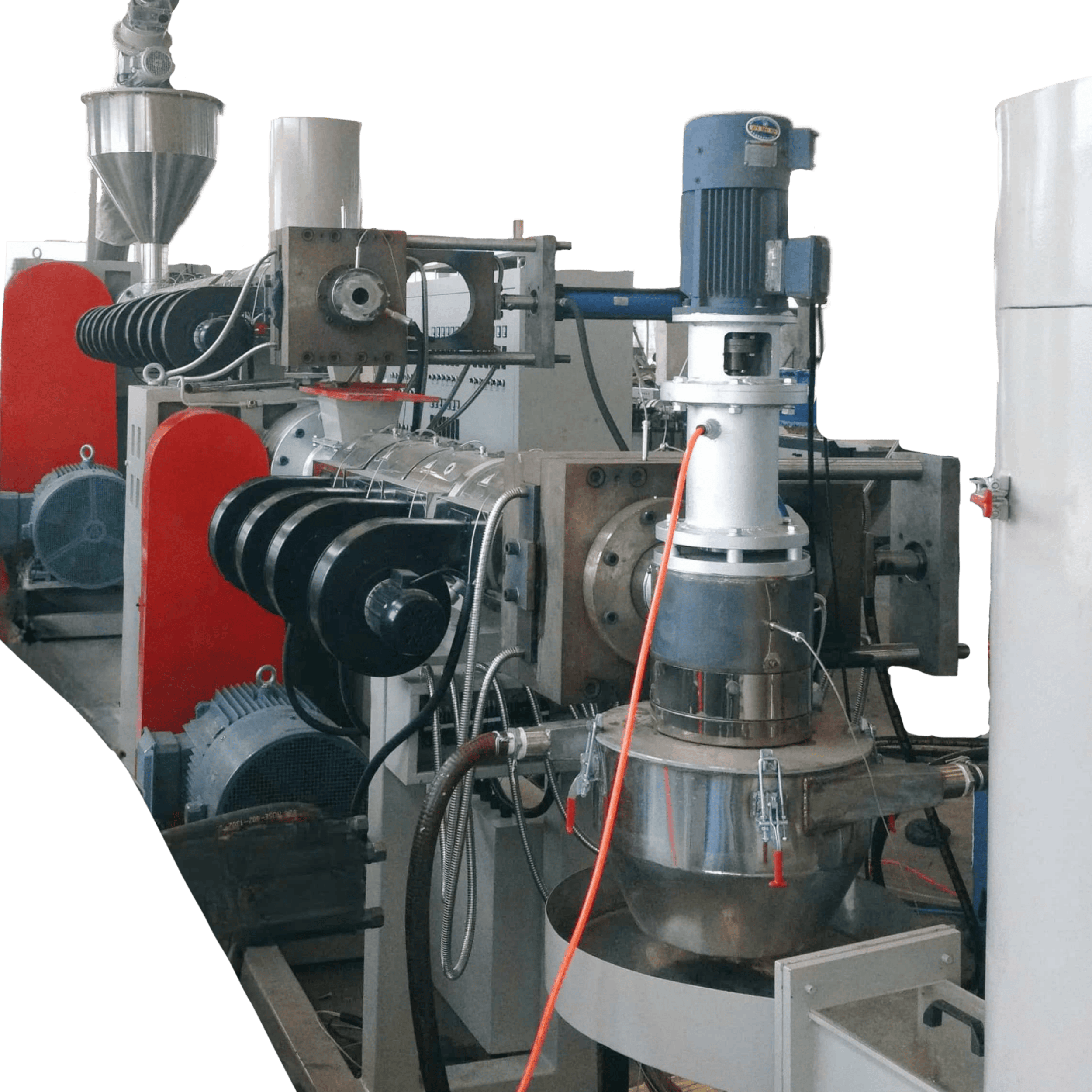
The Closed-loop Automation system helps eliminate excess waste because it records measurements and responds to them as events are occurring. As an example, Laser Scanners track in real-time the pipes’ diameter and wall thickness, and sends information about those variables to the control system, after which that system adjusts the die pressure or even pulls off (or down) at different speeds. Also, the Gravimetric Feeders contribute to the system and even are able deliver the resin blends within an accuracy of half a percent. This, in turn, helps to alleviate the problems associated with the over feeding of the materials and as a consequence having an inconsistent composition. Moreover, these ATC systems provide a continuous supply of power, and therefore, there is no need to worry about temporary power supply interruptions that are frequent to interrupt the heating or cooling supply of thermoregulated systems. Finally, plants that have integrated these systems have reported a reduction in waste of 18 to 22 percent due, once again, to the continuous and consistent operation of the mentioned systems.
Detect Process Correction and Defect Detection with Adaptive and Artificial Intelligence
Artificial intelligence utilizes the power processing, and machine vision systems, and analyzes extruded pipe surfaces and in less than 0.8 seconds per cycle identifies and analyzes micro-defects (bubbles, fractures, and surface warping); artificial intelligence outperforms human defect detection. For each defect, the system initiates the appropriate corrective action:
Defect Type AI Response Waste Reduction Impact
Wall Thinning Adjusts screw speed & zone temperature 12–15%
Surface Irregularity Modifies haul-off tension 8–10%
Ovality Calibrates vacuum sizing tanks 14–17%
Through analysis of historical process data, predictive algorithms can identify and anticipate failure modes. This allows the system to adjust to the process in advance of a defect occurring and improves the overall system performance by decreasing scrap in comparison to the traditional systems. This predictive intelligent system ultimately improves system throughput and quality while simultaneously reducing the overall contribution to landfills and improving environment based on the reduction of the scrap rate in comparison to the reactive systems.
Energy-Efficient Equipment Developments for Sustainable Extrusion of Plastic Pipes
High-Efficiency Drive Systems: Servo Motors and Variable Speed Drive (VSD) Systems
The starting point for enhanced energy efficiency is the drive system. Servo motors provide much more precise control of torque and rotation during the extrusion operation than induction motors. While induction motors may provide excess torque (and cause energy waste), servo motors provide just the right torque when and where needed. There are also Variable Speed Drives (VSDs) that control the drive motor output based on demand (i.e., not everything is running at full capacity continuously). The combination of both technologies can achieve a reduction of energy consumption at the drive system by approximately 30% during operation of a typical extrusion system with certain controlled quality parameters. VSD and servo motor technologies also allow plants to achieve lower kWh use and lower peak demand billing, thereby contributing to reduced carbon emissions.
Systems for Screws and Barrels that Have Been Thermally Optimized
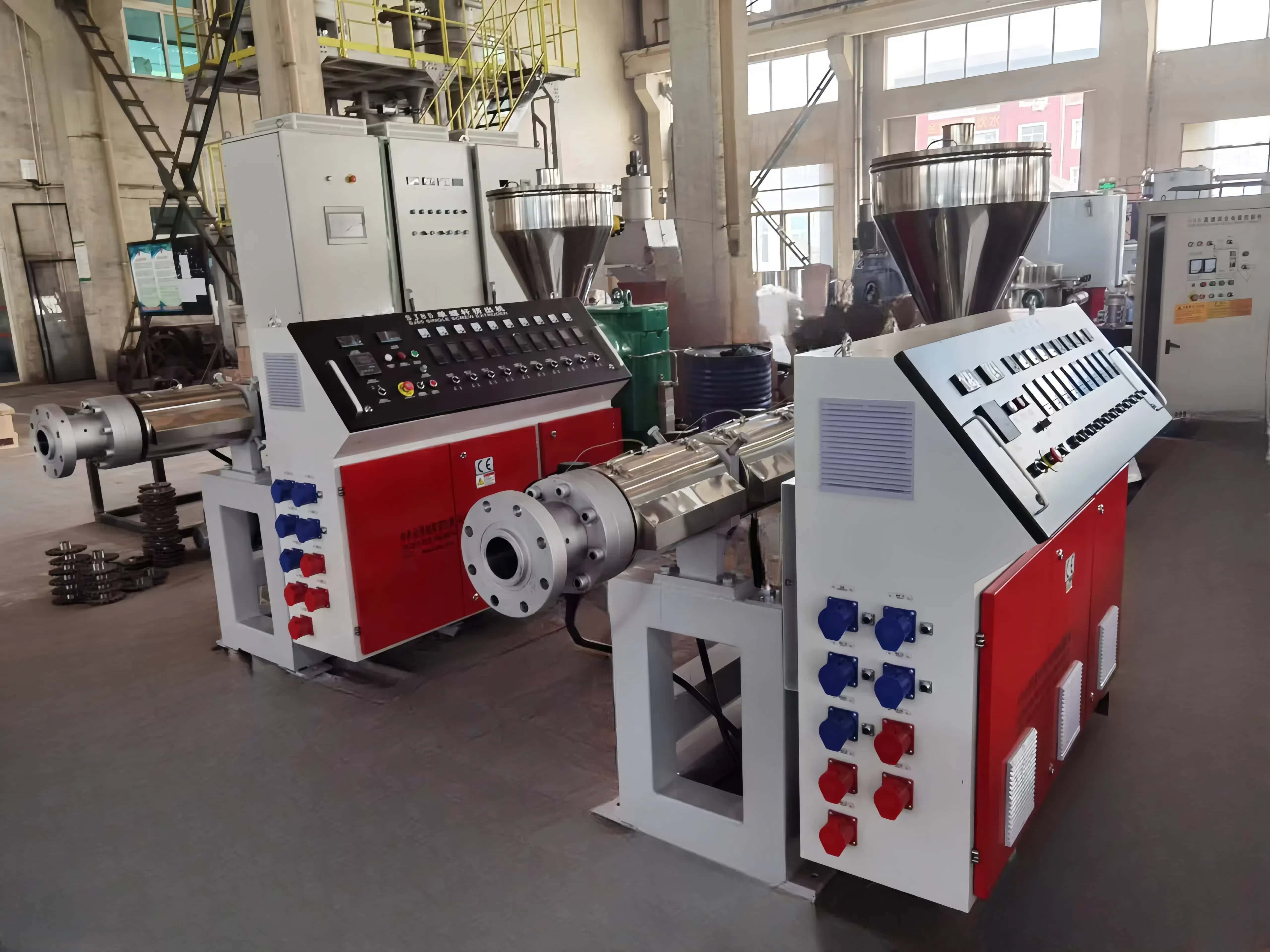
screw design and construction that is optimized for thermal processing and barrier effect design of screws enhances processing heat work because they hold the solid polymer separate from the molten polymer. This friction separates the molten polymer from the solid polymer that is molten and as a result, the amount of mechanical work required may be reduced by as much as 25%. Insulation of polymer melting elements from the surrounding environment through the use of multiple layer ceramic insulation barrels, as well as the use of multiple layer ceramics may imperviously insulate polymer melting elements from the surrounding environment to assist in the insulation of polymer melting elements. Therefore, manufacturers will inevitably expend less mechanical work to achieve the processing of a given mass of polymer, and the reduced melting of polymer will result in a reduced loss of mechanical energy for a given mass of polymer to be molten. This is essential for manufacturers of Pvc pipe.
FQA Section
What is the effect of thermal control on the extrusion of plastic pipe?
The control of thermal energy in the process of the extrusion of plastic pipes is essential as it needs the processing to be in the molten state for in order that the processing to have the desired internal structure to be possible.
By what means do systems that use PID control achieve a more homogeneous melt?
By means of PID control systems, the use of control systems can achieve a melt that is more homogeneous than that of a system that does not use control systems.
What is the impact of IoT and predictive analytics on thermal management?
IoT and predictive analytics enhance thermal management by facilitating the transition from reactive, to proactive thermal management by allowing issues to be resolved before they impact production through the thermal management systems automatic adjustment and real-time monitoring capabilities.
In what ways does closed-loop automation minimize waste?
Closed-loop automation minimizes waste by utilizing the real-time feedback to make adjustments to keep the dimensions and make-up of the pipes consistent.
What are the advantages of energy-efficient hardware in plastic pipe extrusion?
Different types of energy-efficient hardware, eg, servo motors and VSDs (variable speed drives), reduce energy costs and carbon emissions by tapering energy use to the amount of motor output that is needed.