EN
EN
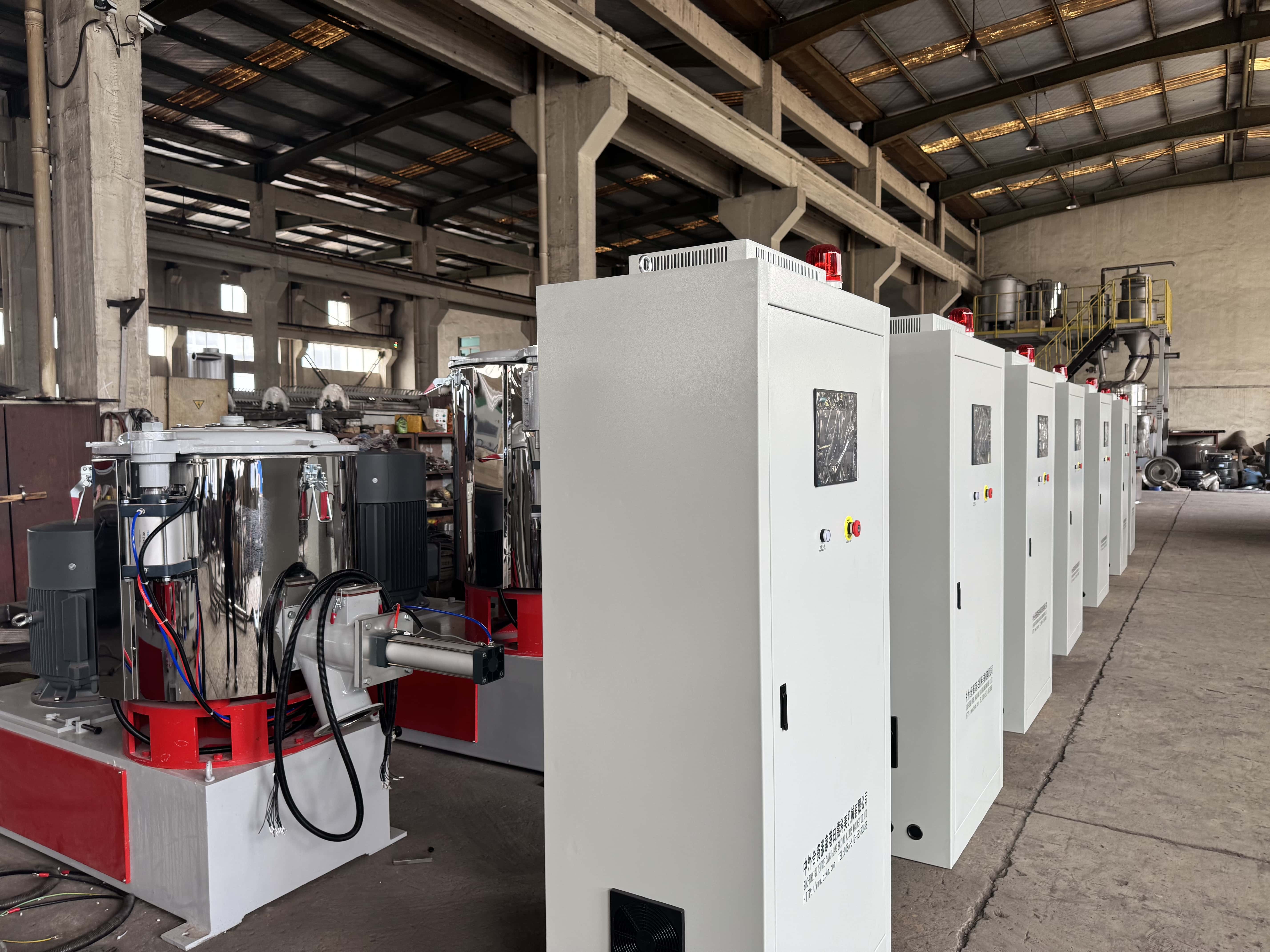
Determine Your Production Needs to Choose the Best Pipe Extrusion Machine
Match Daily Volume Requirements with Output Capacity and Extrusion Speed
The first step is calculating your daily production volume based on factors like the number of shifts per day, the target length of each produced pipe, and an realistically utilized production capacity, which is often 75-85%. A pipe extrusion machine with a 300 kg/h rating may appear to satisfy those production goals, but unplanned production disruptions, the waste that occurs at the start of production, and the changing of manufacturing materials, may all greatly reduce the machine's effective output to 80-85% of the rated value. The speed of the extruder will dictate the length of time each production cycle will take. A faster extrusion machine means faster cycles, which in turn increases throughput. However, a machine that is faster in extrusion will require better quality downstream process equipment in order to maintain dimensional tolerances and the surface finish of the pipe. Specifying a throughput capacity that is too large will increase the cost and the operating energy of the pipe extrusion machine. On the other hand, specifying a capacity that is too small will result in production bottlenecks and increases the likelihood of late deliveries. Specify a continuous throughput in the range of your daily production goals,
PVC, PE, and PP call for different screw configurations along with different temperature treatments.
Extrusion system performance varies with the type of polymer. PVC is heat sensitive and can erode system components when degraded. It requires low compression screws, chrome-plated or bimetallic barrels, and carefully controlled temperature zones to mitigate the release of hydrochloric acid and resulting discoloration. PE, specifically HDPE and MDPE, operates well with screws of higher compression and wider control of temperature zones. PE and PP also require different design features. Unlike PE, PP is semi-crystalline and can have die swell and post-extrusion shrinkage, and will need accurate control of the metering-section and temperature zoning within ±1.5 °C along the barrel. A system optimized for PE will have significantly greater wear when used with PVC, and will also produce off-spec pipe. Verify that the supplier provides application-specific screw/barrel configurations, and supports them with material trials.
Recognizing Dimensional Tolerances—OD Consistency and Uniformity in Wall Thickness
For pipes subject to ASTM F714, ISO 4427, and EN 1555 wall thickness uniformity and OD consistency are critical quality thresholds. Wall thickness variation of only ±0.1 mm would affect the pressure rating of the pipe and most likely result in product rejection. Such consistency is a function of the repeated die gaps, steady melt temperature (±2 °C) and controlled vacuum pressure in the cooling tank. For OD control the continuous flow of the screw and puller system must be in complete synchronization, and even minor slippages would result in either a stretched or compressed product. For equipment, provide a closed-loop thickness control with a servo driven haul-off design that can hold critical tolerances of ±0.05 mm. Also, during factory acceptance testing (FAT), check for uniformity with cross-sectional measurements taken at multiple places along a 10 meter sample.
Single-Screw Vs. Twin-Screw Pipe Extrusion Machines
Single-Screw Pipe Extrusion Machines
Single-screw extrusion machines are perfect for producing rigid PVC pipes. These machines offer a simple design with a single rotating screw that conveys material. Due to their simple design, these machines are very cost friendly and low maintenance. Compared to their twin-screw counterparts, these machines are energy efficient and consume 10-15% less energy. Material consistency and pellet design of the feed ensures low surging and high pressure of the feed, ensuring tight control of dimensions of the output. Although mixing capabilities are limited, and degradation of heat sensitive materials and resins, single-screw machines are perfect for high yield operations that are cost effective and require low operational management.
Twin-Screw Pipe Extrusion Machines
Twin-screw pipe extrusion machines are perfect for operations that require high mixing capabilities. Some examples of uses for a twin-screw machine are the production of pipes with a multi-layered structure and the production of pipes with high content recycled materials. These machines possess amazing positive conveying capabilities due to the design of the intermeshed screws. Twin-screw machines possess lower thermal degradation of materials and a self washing action which pulls remaining screws from the previous operation. Although these machines are expensive and require skilled personnel, they pay for themselves when a company begins production of complex and high recycled layered materials.
Evaluate Critical Components That Ensure Dimensional Stability and Process Reliability
Barrel, Screw (L/D Ratio, Geometry, Hardened Alloy), and Die Head—Direct Drivers of Melt Homogeneity and Pipe Roundness
Melt and geometric fidelity are controlled by the Barrel-Screw-Die Head systems. An L/D ratio of 32:1–36:1 ensures optimal residence time and shear for complete melt, this is especially true for recycling and/or filled materials. Screw design must be matched to polymer viscosity. This means barrier screws are used for PVC to separate the feed and melt zones and grooved feed sections are used for PE plastic to improve the transport of solids. Bimetallic or nitrided alloy barrels of the same design are used to protect barriers against the abrasive nature of polyethylene, glass fiber, and regrind. Rotating heads with balanced channels and adjustable calibration sleeves assist in eliminating weld lines and ensuring uniform radial expansion. These systems work together to maintain the melt temperature within ±2 °C, ensuring that the extruded materials do not form oval shapes, that wall thickness is concentric, and that the wall thickness is uniform.
Vacuum Cooling Tanks, Spray Units, TCUs, and Puller-Master Synchronization for Wall Thickness Control
Downstream equipment keeps extruded pipes at their intended shape and dimensions. Vacuum cooling tanks set OD and reduce sag by applying a controlled negative pressure. Spray units deliver water uniformly, preventing stress and microcracking. Precision temperature control units (TCUs) keep the fluid in the cooling tank to within ±1 °C. This is vital to minimize shrinkage disparity in thick-wall or multi-layer pipes. Puller-master synchronization is a real-time pull system, and when combined with service driven caterpillar haul offs, brings wall thickness, sag, and distortion to a minimum due to the elimination of slippage and tension variation. The integration of statistical process control (SPC) with a Cpk target of wall thickness, OD, and concentricity at a value of ≥1.33, gives assurance and minimizes scrap. These units are essential to the entire downstream system.
Weigh Long-Term Pipe Extrusion Machine ROI Against Total Cost of Ownership
For a 10-year lifecycle, the purchase price covers only 30–40% of the total cost of ownership (TCO). To calculate the true ROI, costs incurred from installation and commissioning, training the operators, 20–30% of the annual operational expenditure on energy, scheduled maintenance, parts inventory, and the hard cost of downtime need to be considered. These costs also include the start-up waste, transition materials, and waste caused by the drift in tolerance. An example would be a machine that produces 5% waste as compared to one that produces 9% waste. The former saves nearly $42,000 on a PE pipe line of 3,000 tons/year (with a $1,400/ton cost of the raw material). The ROI is:
[( ext{Total Net Revenue} - ext{Full TCO}) ÷ ext{Initial Investment} × 100]
A five-year ROI of ≥ 15% suggests a strong economic case, assuming the model uses verified data: manufacturer-reported kWh/kg, mean time between failures (MTBF ≥ 5,000 hrs), and documented uptime (>92%). Always ask for third-party validation reports and reference customer case studies for your specific material and output before making a purchase.
FAQ
What factors affect daily production volume in pipe extrusion?
Daily production volume is affected by shift hours, the targeted length of the pipe, the line utilization rate (typically 75–85%), the number of material changes, the amount of start-up waste, and the amount of downtime that is not planned.
What role do materials such as PVC, PE, and PP play in the selection of an extrusion machine?
Each of these materials has different requirements. For example, with PVC, a low-compression screw is required, and good control of the temperature is necessary. With PE, the required screw is of a higher compression, and in the case of PP, good control of the metering is required due to post-extrusion shrinkage.
Why are dimensional tolerances important in pipe extrusion?
Factors such as consistency in outer diameter and uniformity in wall thickness are essential to pressure ratings and help to minimize rejection. Reliability of a product directly correlates to these tolerances.
Which one do you prefer? A single-screw or a twin-screw extrusion system?
For PVC, a highly homogenous material, production in high volumes is best achieved using single-screw machines. For multi-layer pipes or recycled feedstock, twin-screw systems provide better mixing and temperature control.
What are the key considerations of pipe extrusion machine ROI?
A useful ROI calculation considers all aspects of the total cost of ownership, such as the cost of installation and training, downtime, and energy costs. Factors such as a high mean time between failures and actual production uptime allow for more accurate ROI estimates.